Solutions · Digital & Smart O&M
Equipment Leasing & Financing: lowering upfront CAPEX for treatment upgrades
Structure payments around uptime milestones and savings—so compliance-driven upgrades do not freeze the entire capex envelope.
Use when
Balance-sheet conservatism blocks upgrades even when opex bleed and risk are obvious.
Process options
Asset-backed structures aligned to measurable performance and service windows—not generic equipment loans.
Assessment output
Faster board approvals with risk allocated to parties who can price operations reality.
Inputs and conditions for an assessment
Collect feed variability, capacity, target quality, operating hours, discharge or reuse boundaries and installed equipment data. Compare examples on matched conditions and meter boundaries; assess a project using actual water data, equipment documentation and any necessary tests.
View the process illustration
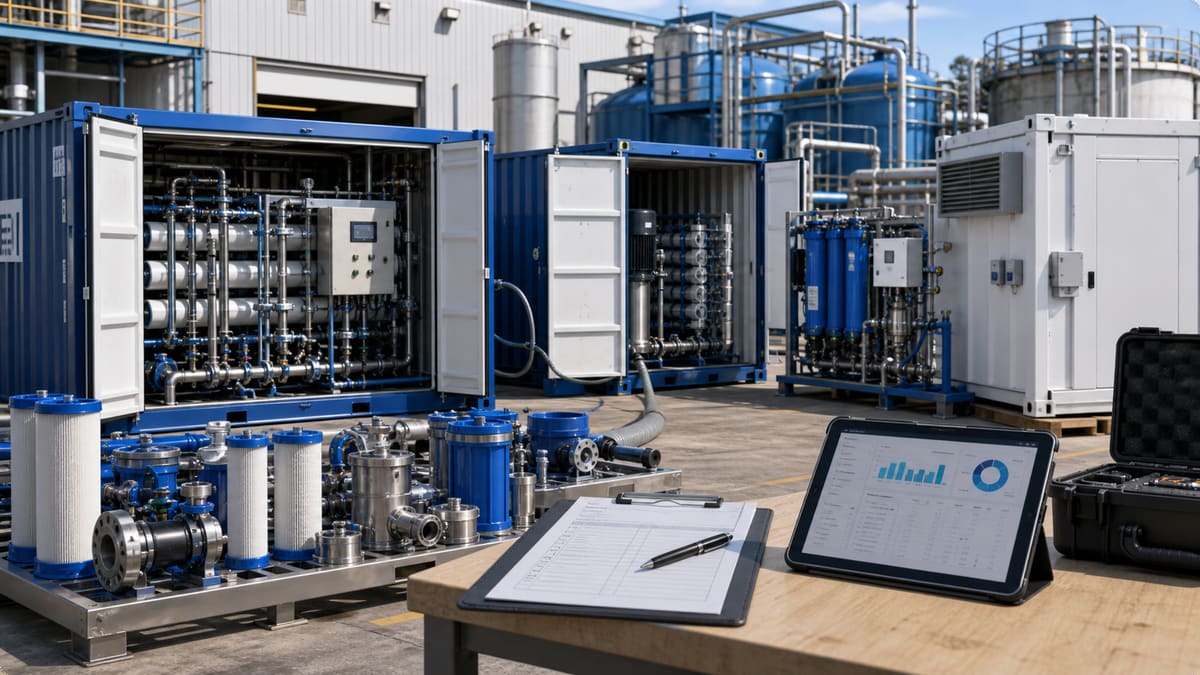
Equipment Leasing & Financing: Lowering Upfront CAPEX for Treatment Upgrades
Equipment leasing or financing can spread upfront cash payments for a treatment upgrade. Compare total payments, financing charges, service scope, ownership, termination rights, guarantees, and end-of-term costs with outright purchase. Cash-flow timing is different from accounting classification: under IFRS 16, most lessee leases require a right-of-use asset and lease liability, subject to applicable exemptions. Leasing does not automatically convert all CAPEX into OPEX.
Traditional vs engineering evaluation path
Consider a scenario where an industrial facility needs to upgrade its aging ultrafiltration (UF) system to improve water quality consistency and reduce energy consumption.
| Traditional way | engineering evaluation path way |
|---|---|
| High upfront CAPEX can constrain outright purchase and approval. | Scheduled payments: Assess the contract's equipment, installation, maintenance, financing and accounting treatment; project timing still depends on approvals, delivery, permits and commissioning. |
| Complex, multi-vendor procurement for equipment, installation, and separate maintenance contracts, leading to integration challenges and fragmented accountability. | Integrated solution with equipment, engineering, installation, and data-driven O&M under a single, transparent agreement, ensuring end-to-end accountability. |
| Reactive maintenance based on system failures or scheduled checks, resulting in unexpected downtime and costly emergency repairs. | Predictive maintenance informed by real-time sensor data, flagging potential issues before they cause disruptions and optimizing operational schedules. |
| Self-management of spare parts inventory can expose the site to stockouts or idle capital. | Contracted spares scope: Identify included parts, exclusions, compatibility, stocking locations, replenishment lead times, and remedies for missed service commitments. |
| Manual data analysis may miss improvement opportunities. | Performance services: Verify whether monitoring, digital twins or analytics are included, how their accuracy is checked, and which performance indicators and acceptance criteria the contract actually covers. |
Data Security & Trust: Your Operations, Your Data
Before enabling remote asset monitoring, agree data ownership, permitted uses, access roles, retention, deletion, export rights, security evidence, and responsibility after the lease ends. A leasing contract alone does not establish an operational analytics service or a secure deployment.
Instrumentation & Sensors: The Eyes and Ears of Your Plant
Specify the meters and sensors needed for the contract's performance indicators, including flow, pressure, conductivity, ORP, and level where relevant. Document calibration, collection frequency, quality checks and responsibility for missing data before relying on analytics or performance-linked payments.
Reference: IFRS 16 Leases.
Related equipment & product lines
These categories typically support the approach above—open any line to compare brands and models.
- Instrumentation & SensorsInstruments and sensors for online monitoring of flow, level, pressure, temperature, and water quality.View category →
- RO MembranesReverse osmosis membrane elements for municipal and industrial desalination.View category →
- Pumps & PumpingHigh-pressure and process pump solutions for water treatment skids and plants.View category →
For a closer review, use the engineering inquiry form to share feed, capacity, target, and project stage. Submission does not constitute a completed design or performance commitment.