Solutions · Application Scenarios
Landfill leachate treatment: organics, ammonia, and salinity under one roof
Integrated biological pretreatment, tight membrane barriers, and engineered concentrate handling. Stable discharge or reuse assessment with measured high-TDS concentrate and residual balances.
Use when
Leachate combines refractory organics, ammonia, and rising salinity—single-unit fixes fail.
Process options
Integrated biological pretreatment, tight membrane barriers, and engineered concentrate handling.
Assessment output
Verify discharge or reuse quality and account for high-TDS concentrate and residuals.
Inputs and conditions for an assessment
Collect feed variability, capacity, target quality, operating hours, discharge or reuse boundaries and installed equipment data. Compare examples on matched conditions and meter boundaries; assess a project using actual water data, equipment documentation and any necessary tests.
View the process illustration
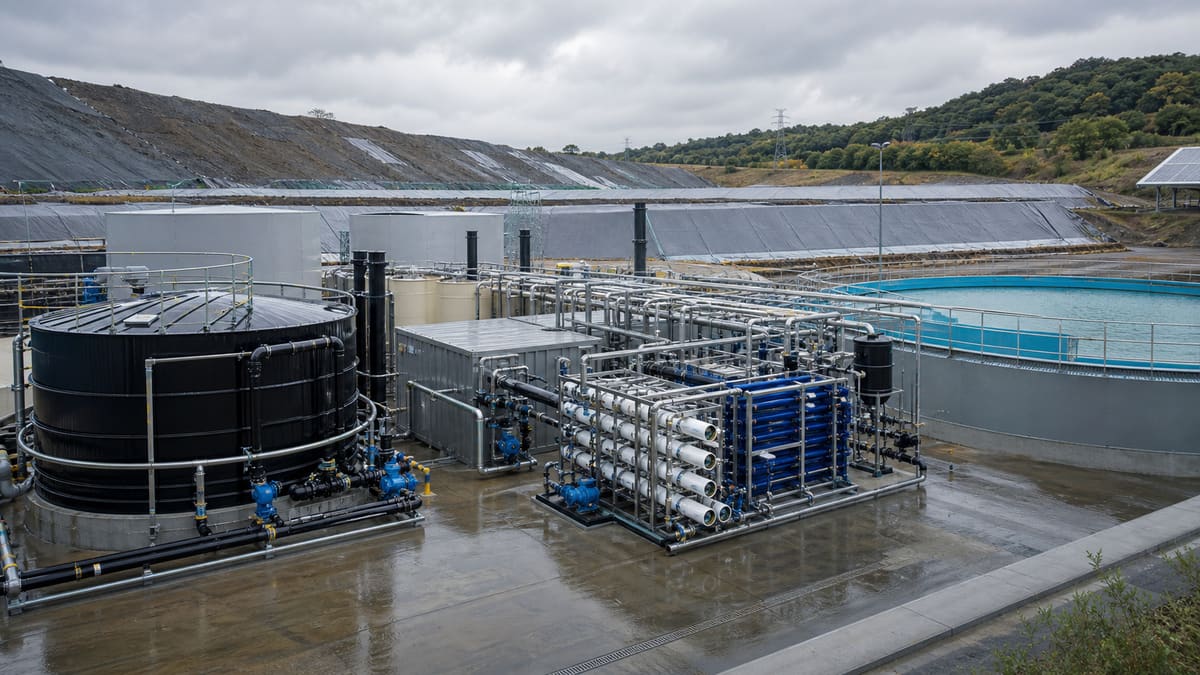
1. Process context & when this scenario is the right entry point
Landfill leachate presents one of the most challenging industrial wastewater streams due to its highly variable and complex composition. Derived from percolated rainwater through decomposing waste, leachate contains a dynamic cocktail of organic matter (BOD, COD), ammonia, heavy metals, suspended solids, and high concentrations of dissolved salts. Treating this effluent is essential for environmental protection, regulatory compliance, and often, to recover valuable water resources.
This scenario is the right entry point when conventional biological treatment alone is insufficient to meet stringent discharge limits for parameters like ammonia, COD, or TDS, or when significant volume reduction and resource recovery (e.g., water reuse) are primary objectives. Facilities facing increasing operational costs for haul-off or seeking to achieve minimal liquid discharge (MLD) or zero liquid discharge (ZLD) will find this integrated biological and membrane approach essential. The complexity of leachate demands a robust, multi-barrier treatment train designed to handle fluctuating loads and diverse contaminant profiles.
2. Feed characteristics & key risks
Leachate depends on landfill age, waste, climate and operation. The following are illustrative broad screening ranges, not universal composition or equipment design limits; representative sampling must establish actual concentrations:
- COD: 500 – 50,000 mg/L
- BOD: 100 – 20,000 mg/L
- Ammonia-N: 50 – 3,000 mg/L
- TDS: 1,000 – 50,000 mg/L
- pH: Highly variable, often acidic in young landfills (5-6) and near neutral in mature ones (7-8).
- Other constituents: Heavy metals, volatile organic compounds (VOCs), refractory organics, high hardness, and silica.
These characteristics present significant risks to treatment efficacy and membrane longevity:
- Membrane Fouling: High concentrations of organic macromolecules (humic and fulvic acids), colloidal matter (clays, silicates), and biological activity lead to rapid organic, colloidal, and biofouling of membranes. This is the primary operational challenge.
- Scaling: Calcium carbonate, calcium sulfate and silica require separate saturation assessment. An RO-concentrate Langelier Saturation Index (LSI) such as +1.0 concerns carbonate under applicable conditions, not all scales; actual activities, temperature and antiscalant compatibility matter.
- Osmotic Pressure: Elevated TDS in the leachate feed necessitates higher operating pressures for reverse osmosis (RO), directly increasing energy consumption and limiting achievable water recovery.
- Ammonia Passage: Rejection of NH₄⁺ and passage of dissolved, un-ionized NH₃ depend on membrane, pH, temperature and feed. Higher pH increases the un-ionized fraction; verify actual permeate ammonia rather than assuming removal.
- Regulatory Compliance: Meeting stringent discharge limits for COD, BOD, ammonia, and TDS often drives the selection of advanced membrane processes.
3. Concentrate / reject routing
Adhering to the principle of mass balance, water treatment does not make matter disappear; it merely segregates and concentrates it. For landfill leachate, careful management of reject streams is paramount:
- Biological Treatment Sludge: Sludge produced from activated sludge or membrane bioreactor (MBR) processes, rich in biomass and adsorbed pollutants, is typically dewatered (e.g., by belt filter press or centrifuge). The dewatered cake is then often sent back to the landfill for co-disposal, incinerated, or treated further depending on local regulations. The dewatered liquid (centrate/filtrate) is typically recycled to the headworks of the biological treatment system due to its high nutrient content.
- Ultrafiltration (UF) / Microfiltration (MF) Concentrate: Backwash and reject contain separated particles, colloids and selected organics. Return to pretreatment or biology only within a verified salt, contaminant and hydraulic balance. Return to landfill requires a specifically permitted, lined and collected arrangement; evaporation or infiltration is not an uncontrolled disposal route.
- Nanofiltration (NF) / Reverse Osmosis (RO) Concentrate (Brine): This is the most critical reject stream, containing the vast majority of the dissolved salts, residual organics, ammonia, and heavy metals rejected by the NF/RO membranes. Its disposition dictates the overall process economics and environmental impact:
- Further Volume Reduction: Additional pressure-rated RO or compatible alternative membrane configurations may reduce volume after feed validation. Thermal evaporation/crystallization can recover condensate, but volatile contaminants, entrainment, wet solids and mother liquor remain relevant. Classify residues and verify permitted acceptance; neither pure condensate nor automatic hazardous-landfill routing is assumed.
- Deep Well Injection: In specific geological conditions and with regulatory approval, the concentrated brine may be injected into deep geological formations. This is a capital-intensive solution with stringent geological and permitting requirements.
- Return to Landfill: Verify specific local permission, waste compatibility, composite lining, collection and hydraulic/salt loading. Returning concentrate does not remove salts and may accumulate contaminants; a non-hazardous label alone does not permit infiltration.
- Haul-off: Licensed off-site treatment may suit limited volumes or constrained sites. Confirm waste classification, facility acceptance, transport and price rather than assuming a universally highest cost.
- Electrodeionization (EDI) Reject: Include concentrate, electrode rinse and any cleaning waste if EDI is justified for a specific high-purity reuse duty. Recycle to RO only after checking chemistry, hydraulic capacity and buildup; EDI is not a standard requirement for leachate discharge.
4. Reference process train options
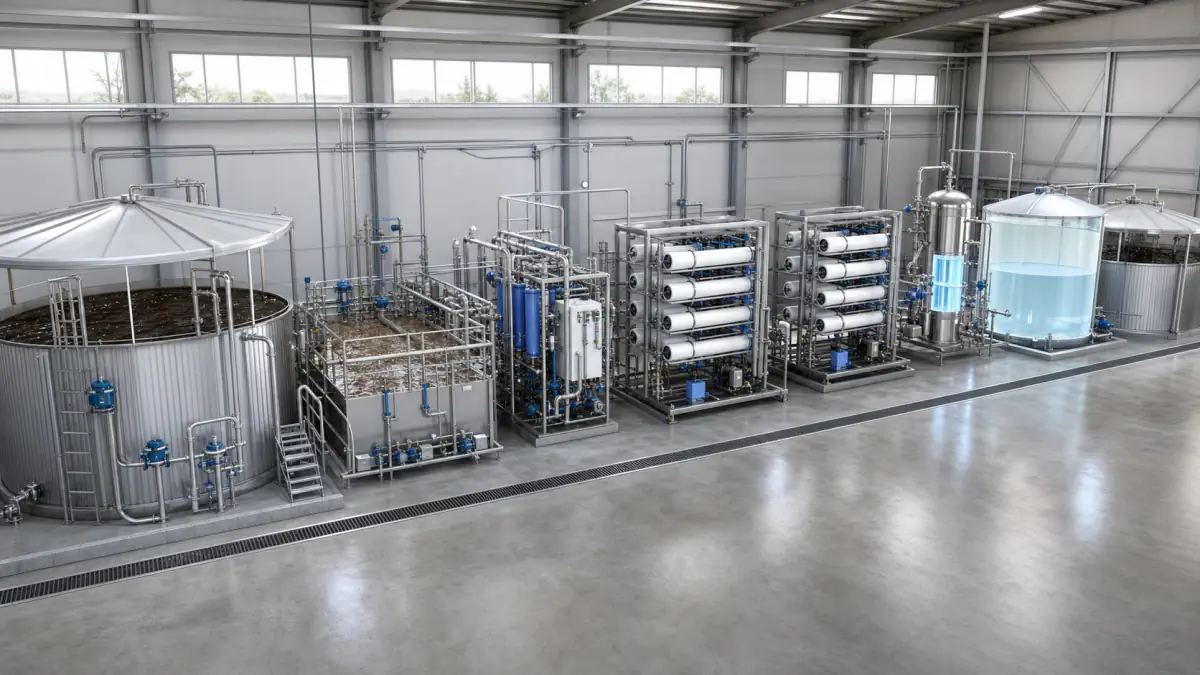
A typical, robust treatment train for landfill leachate integrates multiple technologies:
-
Pre-treatment:
- Screening & Equalization: Initial removal of gross solids and flow/load balancing to buffer downstream processes from variability.
- Chemical Coagulation/Flocculation + Sedimentation/DAF: Essential for removal of suspended solids, colloids, heavy metals, and some complex organics. pH adjustment is frequently necessary for optimal performance.
- Biological Treatment (MBR or Activated Sludge): Biological removal depends on biodegradable load, inhibition, oxygen, temperature and sufficient nitrification-denitrification capacity. MBR can retain suspended biomass, but does not guarantee removal of refractory dissolved COD, ammonia, salinity or a particular downstream SDI₁₅.
- Granular Activated Carbon (GAC) / Powdered Activated Carbon (PAC): Post-biological treatment, for adsorption of recalcitrant organics, color, and odor compounds not removed by biological or coagulation processes.
-
Membrane Filtration:
- Ultrafiltration (UF) / Microfiltration (MF): These may reduce particles and colloids after biology or carbon treatment when suitable. Verify integrity, actual downstream SDI₁₅ and remaining dissolved/biological fouling risks; filtration alone does not ensure a universal microbial barrier or salt removal.
- Nanofiltration (NF): Can be strategically placed as a pre-RO stage. NF selectively rejects divalent ions (hardness) and larger organic molecules, reducing the scaling potential and organic loading on the RO, potentially at lower operating pressures.
- Reverse Osmosis (RO): Select membranes and pretreatment for actual salinity and contaminant passage. 2-pass RO can polish first-pass permeate when required; passes differ from concentrate-fed stages. Verify all reuse or discharge parameters rather than inferring complete removal from bulk salt rejection.
-
Post-treatment (for specific permeate quality requirements):
- Electrodeionization (EDI): For an appropriate high-purity duty, compatible RO permeate may receive further ionic polishing. EDI avoids routine acid/caustic resin regeneration, but feed limits, cleaning, electrode circuits and the complete product specification still apply.
- UV Disinfection: For microbial inactivation if the permeate is destined for direct reuse applications.
Throughout the process, chemical dosing (e.g., antiscalants, pH adjusters, biocides, cleaning chemicals) is critical for process optimization and membrane health.
5. Operating parameters
Precise control and monitoring of key operating parameters are fundamental to the successful and cost-effective treatment of leachate:
- SDI₁₅ (Silt Density Index): Targets < 3, < 2 and an upper guidance value of 5 are illustrative and membrane/feed-specific. SDI₁₅ is a timed particulate/colloidal test, not a guarantee of no organic or biological fouling; UF/MF does not automatically meet the target.
- LSI (Langelier Saturation Index) / Scaling Posture: LSI addresses carbonate saturation, with +0.5 or +1.5 to +2.0 retained as illustrative conditions, not universal precipitation thresholds or safe limits. Validate carbonate chemistry and antiscalant conditions, and evaluate silica and calcium sulfate separately.
- Design Flux (LMH - L/(m²·h)): 8 to 20 LMH for leachate RO and 30 to 80 LMH for UF/MF are illustrative ranges, not design guarantees. Select flux by representative feed, actual membrane, temperature, recovery, cleaning and fouling assessment.
- DP (Differential Pressure) / Stage Pressure Drop (ΔP): Distinguish element, vessel and stage measurements. A normalized 10-15% increase may prompt manufacturer-specific assessment or CIP, but can also reflect flow or mechanical changes. Follow actual pressure limits and investigate abnormal trends without assuming a unique fouling mechanism.
6. Digital twin & instrumentation
Instrumentation supports operation of variable leachate treatment. Proposed digital-twin functions need verified installed scope, data quality and independent validation; their presence or a guaranteed risk reduction is not automatic.
Instrumentation & Sensors: A network of precise sensors provides real-time operational data:
- Flow Meters: Indispensable for mass balance calculations, installed on influent, permeate, concentrate, and all critical process and chemical dosing lines.
- Pressure Transmitters: Positioned across all membrane stages, pumps, and filters to monitor system pressures and crucial differential pressures (ΔP) for early fouling detection.
- Conductivity/TDS Probes: Measure conductivity with temperature compensation. Deriving TDS, salt rejection or contaminant mass requires a validated composition-dependent conversion or chemical analysis.
- pH/ORP Sensors: Essential for pH adjustment control in pre-treatment, monitoring biological process health (ORP), and ensuring optimal conditions for membrane operation and cleaning.
- Temperature Sensors: Crucial for temperature correction of conductivity measurements, flux normalization, and optimizing chemical reactions.
- Turbidity Meters: Track particle-related pretreatment performance after filtration such as UF/MF. Turbidity cannot substitute for SDI or prove control of dissolved contaminants.
- Chemical Dosing Sensors: Level sensors in chemical tanks and precise flow meters on dosing lines ensure accurate chemical consumption tracking and dosage control.
7. Pilot-Scale vs Industrial RO
A pilot-scale RO test can evaluate representative leachate, pretreatment, flux, recovery, salt passage and cleaning. Confirm actual pressure/material compatibility, mobility and deployment arrangements rather than assuming a ready-made mobile platform. For larger continuous duties, industrial RO design should specify concentrate routing, membrane passes/stages, redundancy, SCADA and any validated models within the actual scope. Neither maximum recovery nor minimum environmental impact is guaranteed by scale or automation.
8. Common engineering mistakes & pilot KPIs
Common Engineering Mistakes:
- Underestimating Feed Variability: Designing a fixed-parameter system for a highly dynamic feed like leachate inevitably leads to operational upsets and underperformance. Dynamic pre-treatment controls and flexible membrane systems are critical.
- Inadequate Pre-treatment: The single most frequent cause of membrane fouling and premature RO membrane replacement. Skipping essential coagulation/flocculation, robust biological treatment, or high-quality UF/MF polishing directly impacts RO performance and lifespan.
- Ignoring Concentrate Management: Focusing solely on permeate quality without a viable, cost-effective plan for the high-volume, concentrated reject stream undermines the entire project's economic and environmental viability. Mass balance is key.
- Over-optimistic Recovery Rates: Pushing RO recovery too high given the high TDS and complex scaling potential of leachate rapidly leads to severe scaling, increased cleaning frequency, and costly downtime.
- Poor Chemical Selection & Control: Incorrect selection or improper dosing of antiscalants, biocides, or cleaning chemicals can exacerbate fouling, damage membranes, and increase operational costs.
Pilot Key Performance Indicators (KPIs):
- Normalized Flux Stability: Track permeate flux (LMH) normalized for temperature, net driving pressure, salinity and recovery, and compare decline between CIPs.
- Membrane Cleaning Frequency & Effectiveness: Number of CIPs required per month/quarter, percentage of flux recovery post-CIP, and chemical consumption per cleaning cycle.
- Permeate Quality: Consistent achievement of target COD, BOD, ammonia, TDS, and specific ion concentrations.
- Concentrate Volume & Quality: Actual concentrate volume produced (for mass balance validation) and its suitability for downstream processing or final disposal.
- Specific Energy Consumption: Energy (kWh) consumed per cubic meter of permeate produced.
- Specific Chemical Consumption: Consumption of antiscalants, pH adjusters, and cleaning chemicals per cubic meter of permeate.
9. FAQ
- Q: Why is robust pre-treatment so critical for landfill leachate RO?
- A: Variable particles, colloids, organics and biological contaminants can foul RO and increase cleaning demand. Select and validate biological, coagulation/flocculation and UF/MF steps as appropriate. A target such as SDI₁₅ < 3 is conditional guidance, not a guarantee from pretreatment or proof that dissolved-organic fouling is controlled.
- Q: How does modular RO manage the high TDS and osmotic pressure challenges of leachate?
- A: Rate membrane, pump and vessel pressure for actual osmotic duty, while limiting recovery according to carbonate and other species-specific saturation. 2-pass describes permeate polishing rather than membrane staging. Additional concentration or thermal treatment must be evaluated with the complete energy, residue and reuse-quality balance.
- Q: What are the primary concerns regarding ammonia in leachate treatment?
- A: NH₃/NH₄⁺ speciation and membrane rejection depend on pH, temperature and the membrane. Dissolved neutral NH₃ may pass more readily than NH₄⁺. Upstream nitrification converts ammonia to oxidized nitrogen; denitrification can then produce nitrogen gas under suitable anoxic conditions and electron-donor supply. Verify actual total-nitrogen/ammonia loads and product quality.
- Q: What options exist for final concentrate disposal in a ZLD scenario?
- A: Evaporators or crystallizers may recover condensate and separate wet solids. Check condensate contamination, residual mother liquor, moisture and complete no-liquid-discharge boundaries. Classification, acceptance and permits determine landfill, stabilization or other appropriate residue treatment; concentrated constituents do not automatically make every solid hazardous.
Engineering references
Related equipment & product lines
These categories typically support the approach above—open any line to compare brands and models.
- RO MembranesReverse osmosis membrane elements for municipal and industrial desalination.View category →
- Activated CarbonPowdered and granular activated carbon (PAC/GAC) for adsorption of organics, odor, and trace contaminants.View category →
- UV DisinfectionUV systems and modules for pathogen inactivation and final disinfection barriers.View category →
For a closer review, use the engineering inquiry form to share feed, capacity, target, and project stage. Submission does not constitute a completed design or performance commitment.