Heat Exchangers for Water Treatment
Heat exchangers are fundamental components in modern water treatment systems, enabling efficient thermal management across various processes. From pre-heating feed water to cooling treated effluent or recovering energy, these devices are critical for optimizing operational efficiency, ensuring process stability, and reducing energy consumption. AquaChain provides access to a comprehensive portfolio of heat exchanger technologies engineered for the demanding conditions of water treatment applications.
Types of Heat Exchangers
The selection of a heat exchanger type depends on specific process requirements, fluid characteristics, and operational parameters.
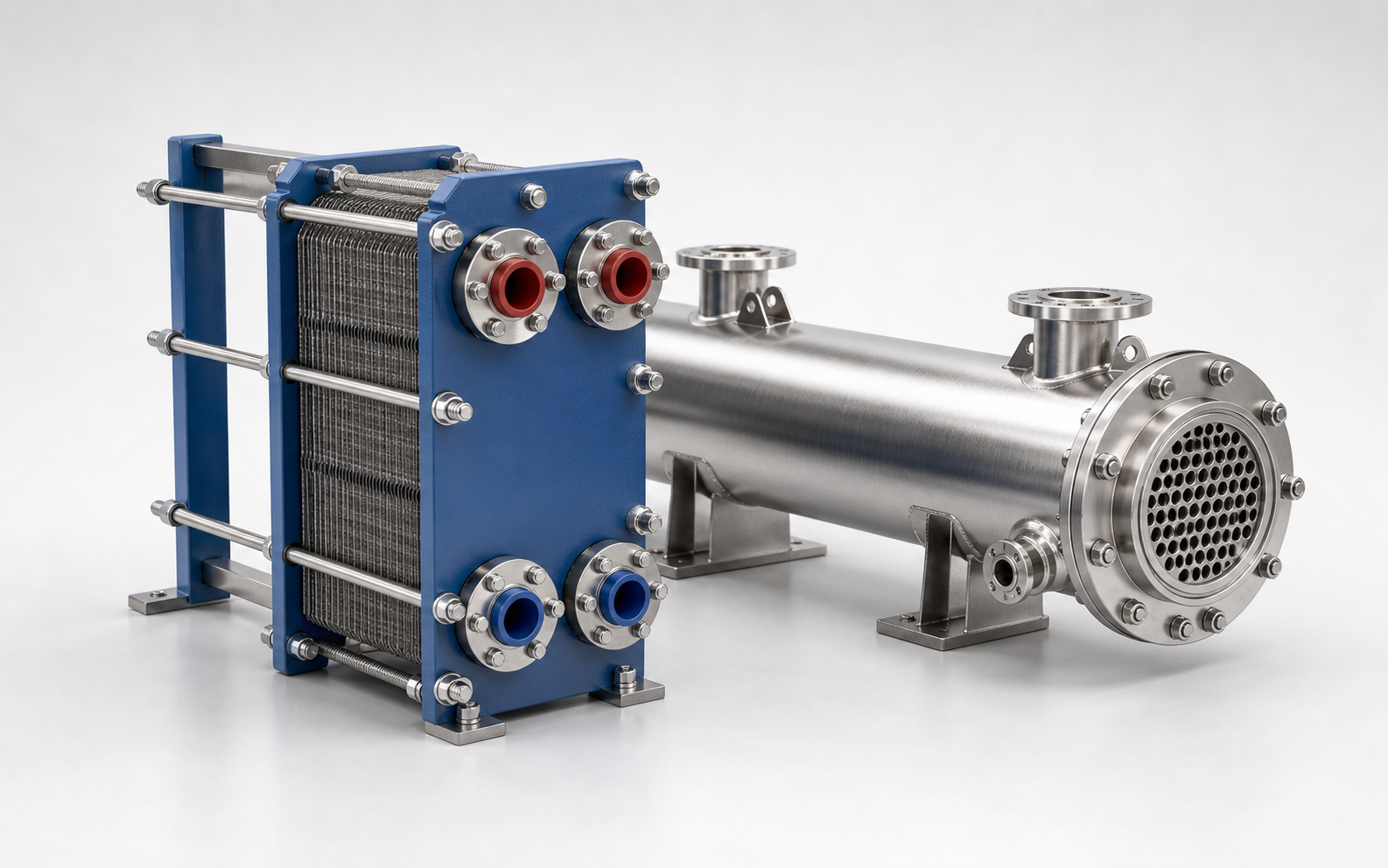
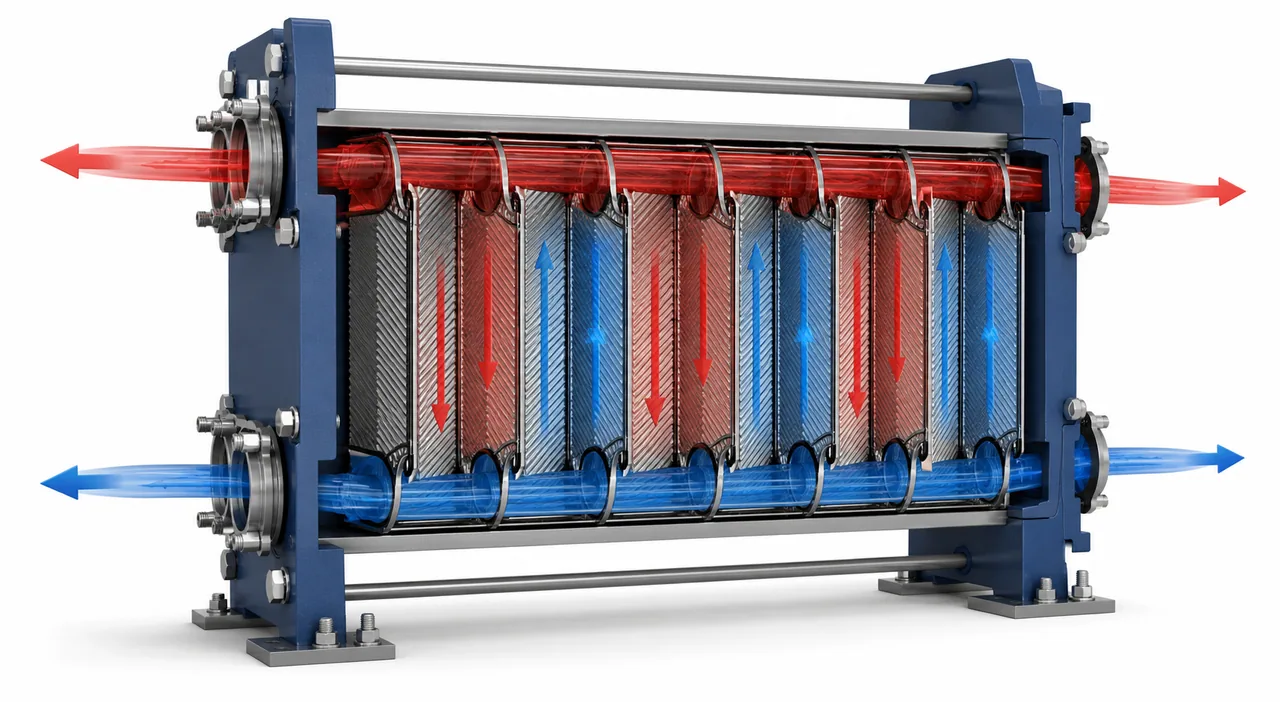
- Plate Heat Exchangers: Characterized by their compact design and high thermal efficiency, plate heat exchangers utilize a series of corrugated plates to facilitate heat transfer. Their modular nature allows for easy expansion or cleaning, making them suitable for applications requiring frequent maintenance or capacity adjustments. They are often chosen for liquid-to-liquid heat transfer where close approach temperatures are desired.
- Shell-and-Tube Heat Exchangers: These robust units consist of a bundle of tubes housed within a cylindrical shell. One fluid flows through the tubes, while the other flows over the tubes within the shell. Shell-and-tube designs are highly versatile, capable of handling a wide range of pressures and temperatures, and are often preferred for applications involving fluids with suspended solids or where robust mechanical integrity is paramount.
- Specialty Configurations: Beyond standard plate and shell-and-tube designs, various specialty configurations exist to address unique process challenges, such as highly viscous fluids, extreme temperature differentials, or specific space constraints. These include welded plate, spiral, or scraped surface designs, each offering distinct advantages for particular water treatment scenarios.
Engineering Considerations
Effective heat exchanger integration requires careful consideration of several key engineering factors:
- Thermal Duty and Approach Temperature: The thermal duty defines the total heat transfer rate required, while the approach temperature represents the minimum temperature difference between the hot and cold fluids. These parameters are crucial for accurate sizing and efficiency calculations.
- Materials of Construction: Given the corrosive nature of water and various treatment chemicals, material selection is critical. Common materials include stainless steel (304, 316L), titanium, and specialized alloys, chosen for their resistance to corrosion, erosion, and compatibility with process fluids. Gasket materials for plate heat exchangers are also selected based on chemical compatibility and temperature resistance.
- Fouling: The accumulation of deposits (scale, biological growth, suspended solids) on heat transfer surfaces, known as fouling, can significantly reduce efficiency and increase maintenance requirements. Heat exchanger designs incorporate features to mitigate fouling, such as optimized flow patterns, surface finishes, and provisions for mechanical or chemical cleaning.
- Design Verification: All heat exchanger designs must undergo rigorous verification. This process relies on the thermal and pressure data provided by the original equipment manufacturer to ensure the unit meets specified performance criteria and operates safely within its design limits.
Integration with Water Treatment Skids
Heat exchangers are seamlessly integrated into water treatment skids to perform various functions:
- Pre-heating: Raising the temperature of incoming feed water for processes like reverse osmosis (RO) to improve membrane performance or for ion exchange to optimize resin kinetics.
- Cooling: Reducing the temperature of treated water or process streams to meet discharge regulations or protect downstream equipment.
- Energy Recovery: Capturing waste heat from one process stream to pre-heat another, thereby improving overall energy efficiency and reducing operational costs.
AquaChain focuses on providing heat exchanger solutions that enhance the reliability, efficiency, and sustainability of your water treatment operations.